From Your 30s to Your Golden Years: The Adult Immunization Timeline Most Americans Miss
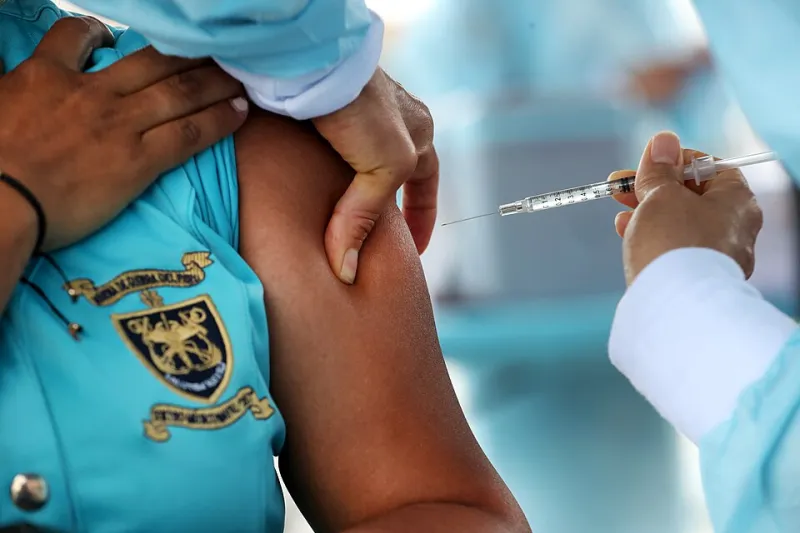
Photo: Ministerio de Defensa del Perú from Perú, Perú, CC BY 2.0, via Wikimedia Commons
Ask most adults when they last thought about vaccines and the honest answer is probably middle school. Yet immunization does not end with childhood — it evolves. The CDC's adult immunization schedule is updated regularly, and it includes recommendations that many patients have never heard of. Falling behind is easy; catching up is easier than you might think.
In Your 30s and 40s: The Maintenance Years
Adulthood begins with a gap many people do not realize exists. Consider the following:
- Tdap booster (every 10 years): If your last tetanus shot was a decade ago, you are due. This one matters doubly for anyone around infants, since pertussis (whooping cough) is dangerous for newborns.
- Annual flu vaccine: Recommended for everyone six months and older, every year.
- COVID-19 vaccination: Current guidance calls for staying up to date with recommended doses, particularly for adults with chronic conditions.
- HPV vaccination (through age 26): If you never completed the series, catch-up vaccination is advised through age 26, with shared decision-making possible between 27 and 45.
- MMR and varicella verification: Adults born after 1957 without documented immunity may need these.
Pregnancy adds its own layer: Tdap during every pregnancy (ideally in the third trimester) to protect the newborn, and flu vaccination at any stage.
At 50: Shingles Enters the Conversation
Two milestones define this decade:
- Shingles vaccine (age 50+): The two-dose recombinant shingles series is recommended for all immunocompetent adults at 50, even if you have had shingles before. Roughly one in three Americans will develop shingles in their lifetime, and the vaccine dramatically reduces both incidence and the risk of lasting nerve pain.
- Hepatitis B (for adults 19–59): Universal hepatitis B vaccination is now recommended for all adults in this age range who were never vaccinated.
At 65 and Beyond: The Protection Decade
The later years bring the most significant additions to your schedule:
- Pneumococcal vaccines: Recommended for all adults 65 and older (and younger adults with certain risk factors). The newer pneumococcal vaccines cover more strains than older versions — ask which one you received and whether another is needed.
- RSV vaccine: A single dose is now recommended for adults 75 and older, and for adults 60–74 at increased risk of severe RSV disease.
- High-dose or adjuvanted flu vaccine: Adults 65+ should receive one of the enhanced flu formulations rather than the standard dose.
- COVID-19 boosters: Older adults remain a priority group for updated doses.
- Continued shingles and Tdap coverage if not already completed.
Who Pays for All of This?
Cost should not be a barrier, and for most Americans it does not have to be:
- Private insurance: Most ACA-compliant plans cover ACIP-recommended vaccines at no cost-sharing when administered in-network.
- Medicare Part B covers flu, pneumococcal, COVID-19, and hepatitis B (for high-risk) vaccines with no out-of-pocket cost for beneficiaries.
- Medicare Part D covers the shingles vaccine and Tdap. Verify your plan includes vaccine coverage — all Part D plans are required to cover ACIP-recommended adult vaccines.
- The Vaccines for Children (VFC) program provides free vaccines to eligible children through age 18 whose families are Medicaid-eligible, uninsured, underinsured, or American Indian/Alaska Native — ensuring the youngest members of your family stay on schedule too.
- Community health centers and health departments often offer low-cost vaccines for those without coverage.
How to Catch Up on Missed Doses
Fell behind years ago? Do not start over — most vaccine series can simply be resumed where you left off, regardless of how long ago the earlier doses were given. Practical steps:
- Gather your records. Check state immunization registries, previous providers, school records, or military records.
- Ask for a titer test if documentation is missing — blood tests can confirm immunity to diseases like measles, mumps, and hepatitis B.
- Bring your list to your next appointment. At our clinic, we review immunization status as part of every annual physical, and we encourage patients to treat it like any other screening.
Prevention Is a Schedule, Not an Event
The most common reason adults are under-vaccinated is not cost or access — it is simply that nobody brought it up. Make it a standing item on your annual visit agenda. A few minutes of review at each physical can close gaps that have quietly widened for decades, and it is one of the highest-value preventive steps you can take at any age.